Timeline
2024
Healthcare Interface Design
Telehealth nurses monitor dozens of patients at once, but their tools reduce each one to disconnected snapshots. This interface restores the missing dimension, a continuous timeline that lets nurses stop chasing alarms and start making decisions.
Duration: 6 weeks
Project Partner: Philips Healthcare
Team:
Sander Randoja
Zeynep Emiroğlu
Shelley Xiao
Working on the mobile view,
please have a look on desktop

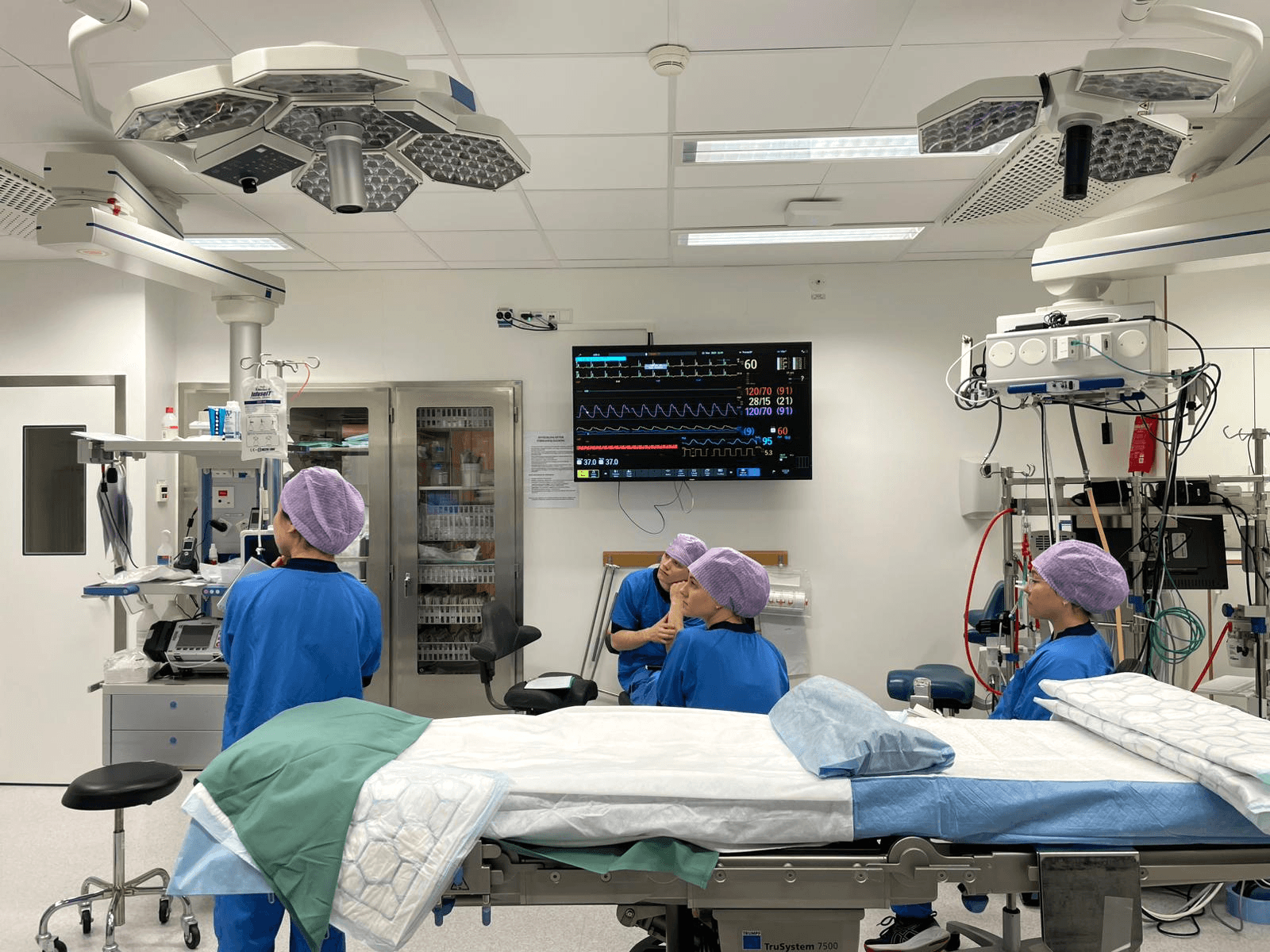
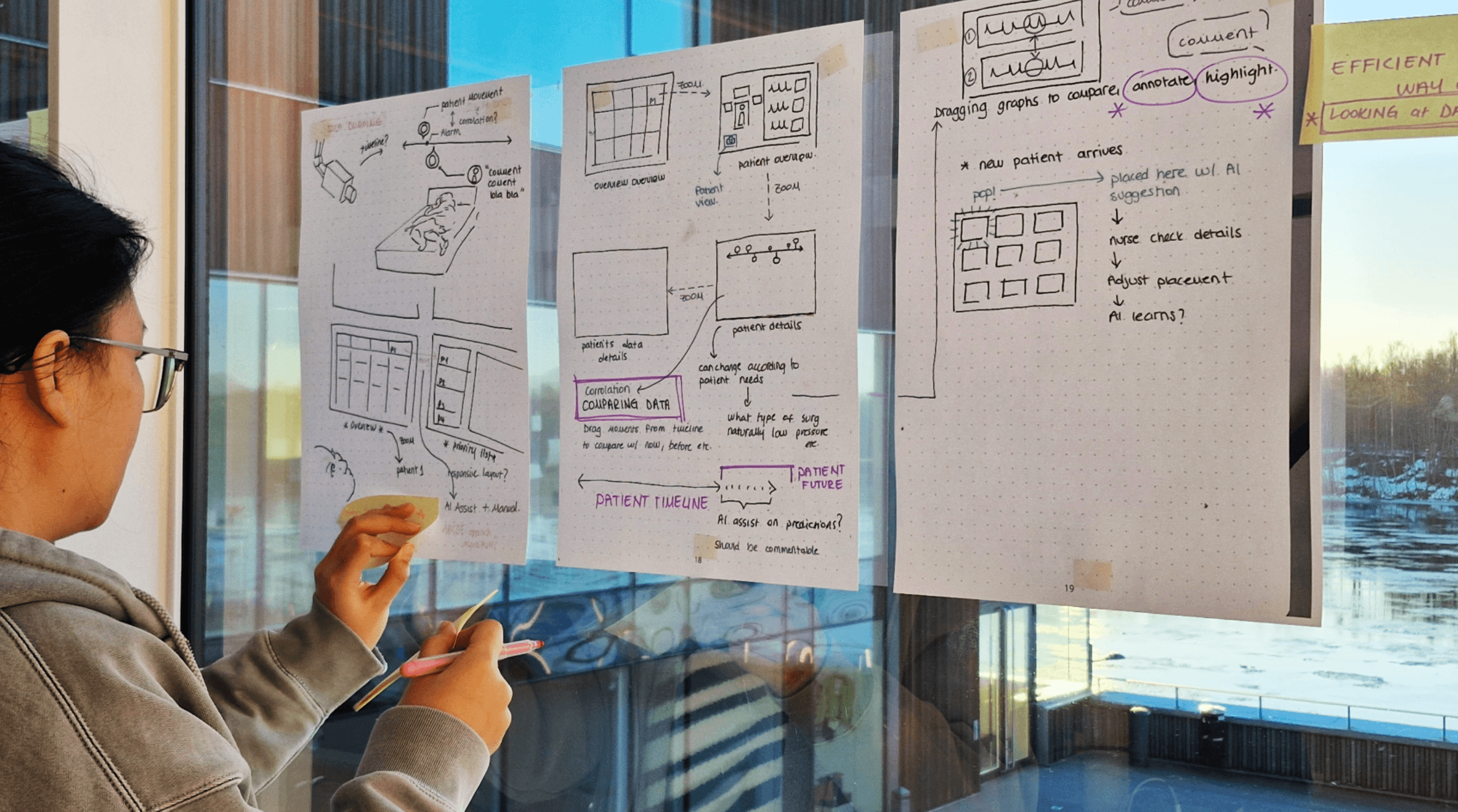
Identifying Key Contextual Cues in Tele-ICU Care
Our research showed that telehealth nurses depend on four main event types for context:
Comments
Medical Events
Alarms
Visual records
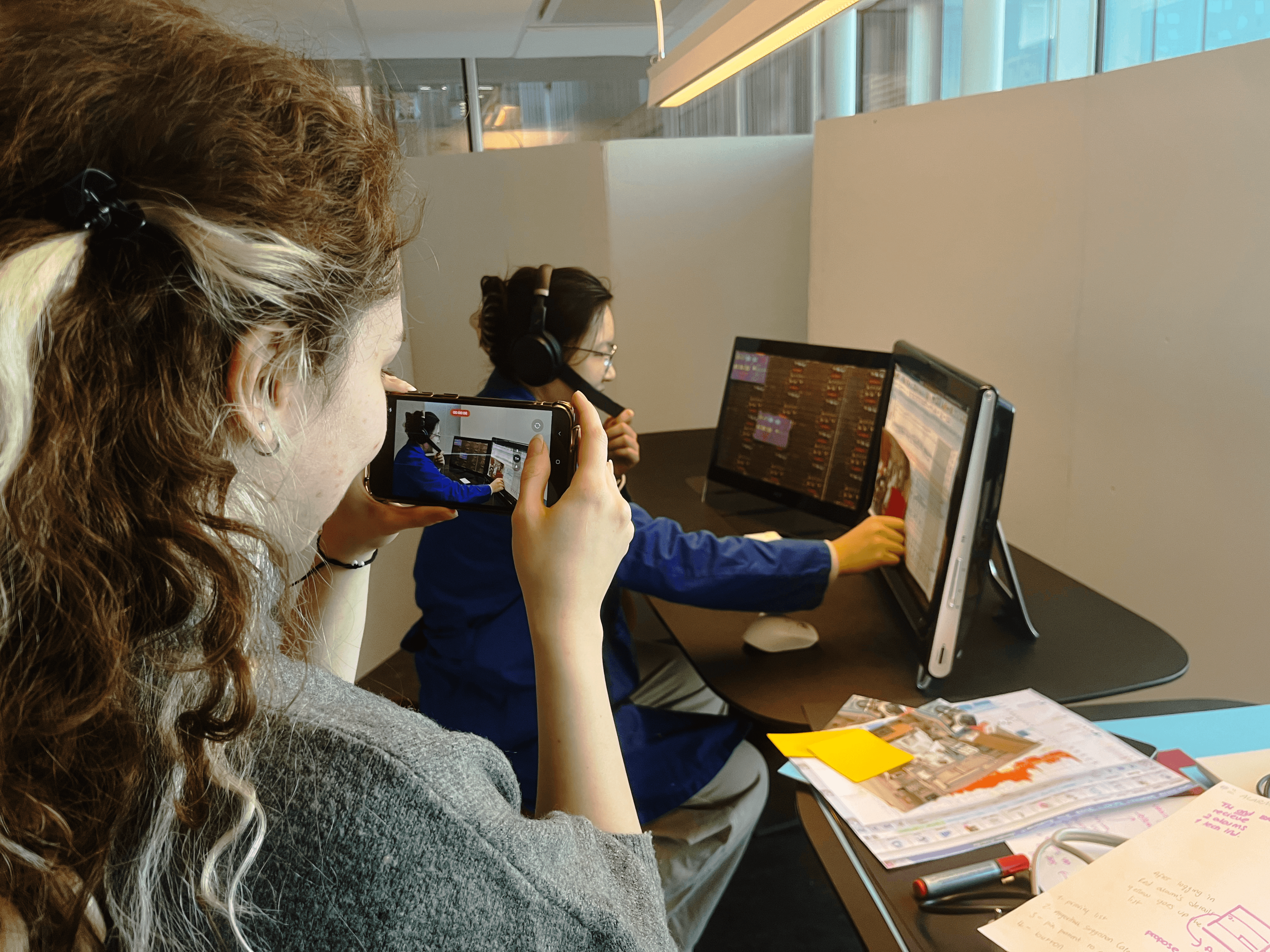
Monitoring View for the Tele-Nurse
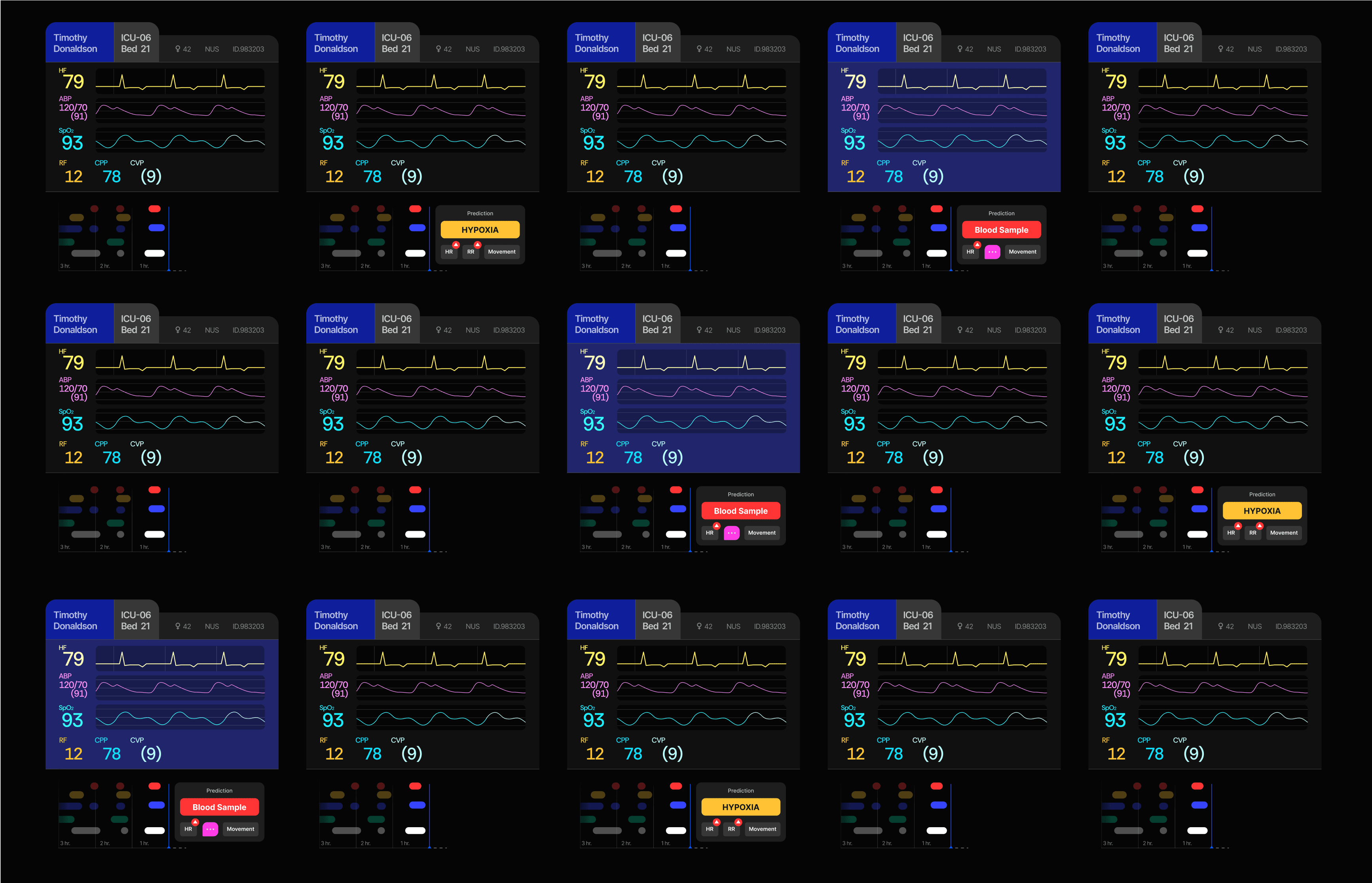
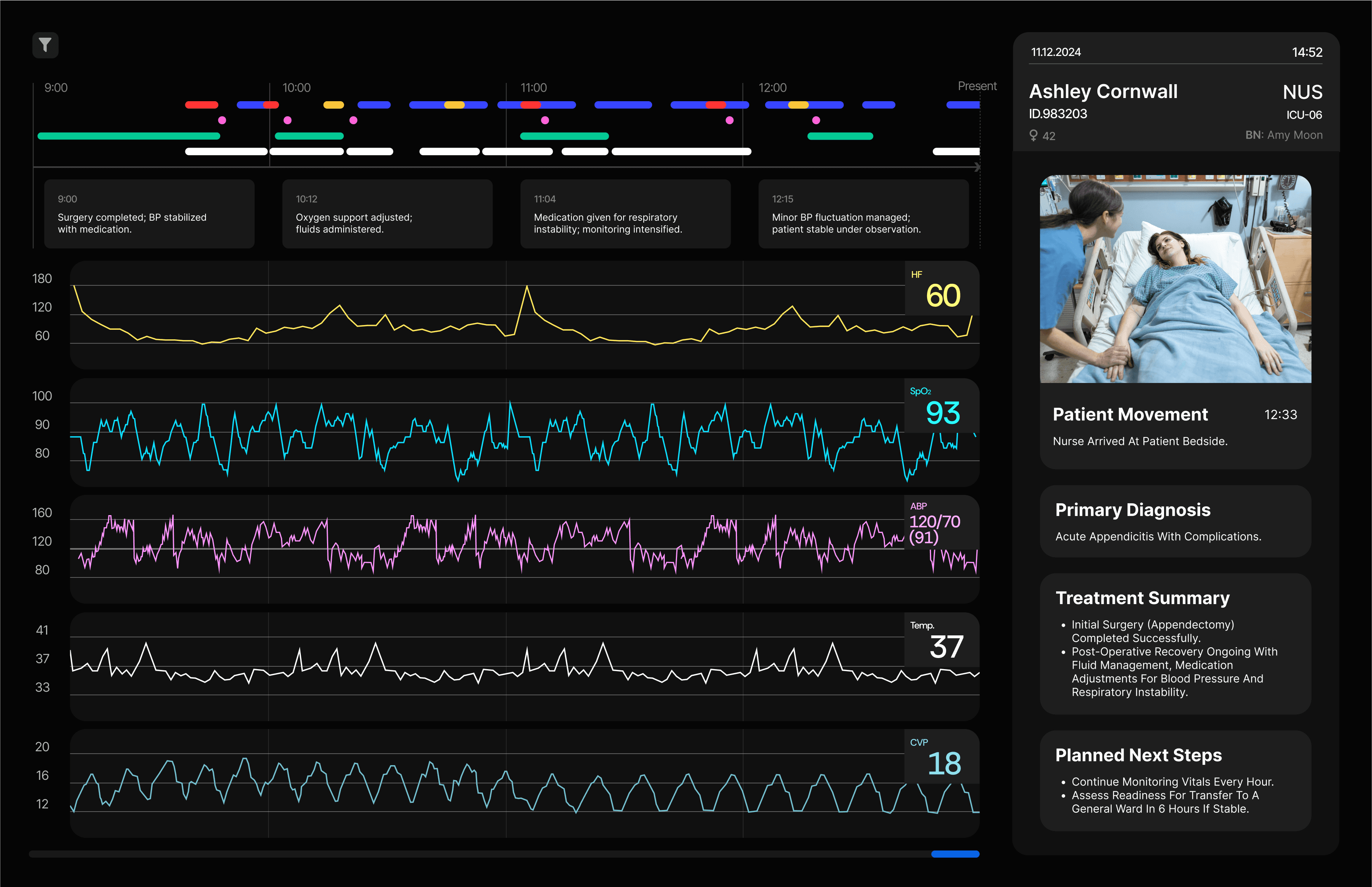
A dual-screen setup. The left shows all monitored patients at a glance.
The right provides a detailed timeline of whichever patient the nurse selects.
Predictive Vitals View
Legacy interfaces presented vitals and alerts as isolated snapshots. A temporal graph and predictive layer surface risks before they become critical.
Patient Context Overall View
Detailed 4-hour timeline showing alarms, medical events, and comments
Hourly summary of clinical events within each time block
Vital sign graphs over the past 4 hours
Scrollable history of past
patient context
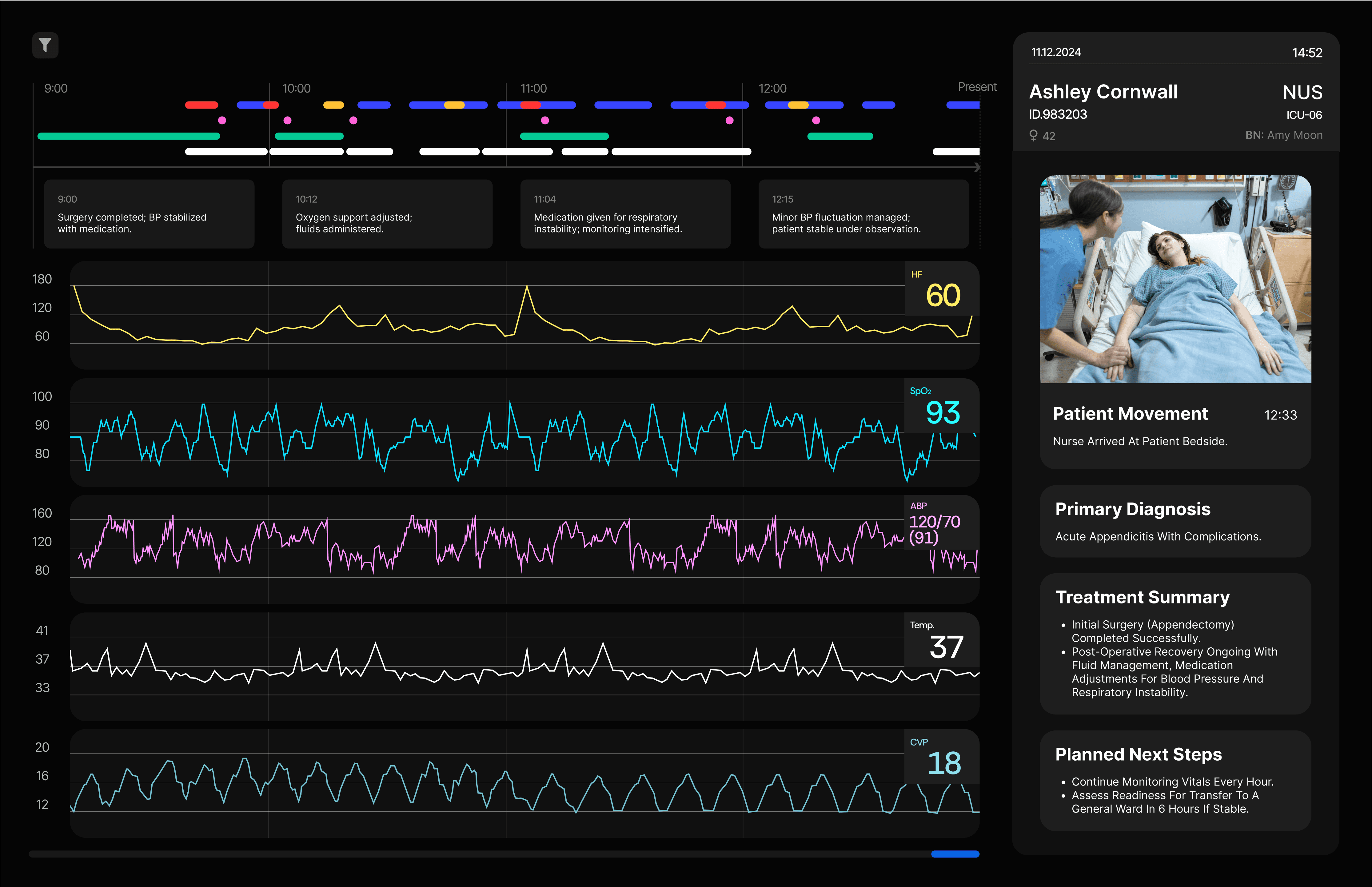
Patient information tab: recent movements, diagnosis, treatment summary, and upcoming care plans
Short video updates of patient movement
Contextual Events View
Alerts link to the timeline, surfacing evidence rather than commands and preserving the clinician's authority over the AI.